
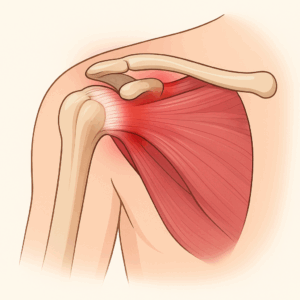
The most common complaint of working professionals, homemakers, and professional athletes is shoulder pain. It begins as a little pinch. It occurs when you reach up to get something from the top shelf, and there it is—a dull, sharp pain that lingers. You pay no attention to it at first. But then it worsens. The type of ache that bugs you when you’re trying to sleep or reach behind your back. That’s when you know it’s not “a little sore.” It might be Shoulder Impingement Syndrome.
What is Shoulder Impingement Syndrome?
Shoulder Impingement Syndrome occurs when rotator cuff tendons and the bursa (fluid sac) of the shoulder are pinched or “impinged” between bones in the shoulder joint. It’s a hinge on a creaky door — with every motion, it grinds and pinches until something gives out. Others refer to it as Swimmer’s Shoulder or Tennis Shoulder.
What Does It Feel Like?
In the beginning, the pain usually feels light and comes and goes. But over time, it slowly gets stronger and more consistent. Most of the people notice the pain when they lift their arm or try to reach overhead — simple things like getting dressed or brushing their hair start to hurt.The pain can move from the shoulder down toward the upper arm or even near the elbow. Sleeping on that side also becomes difficult because of the discomfort.
Sometimes, in many cases, you might also notice a clicking, popping, or grinding sound when you move your arm. This happens because the space inside your shoulder joint becomes tight, causing the tendons to rub or catch as they move.For some, it feels like a dull, burning ache. For others, it’s more of a tight and stiff feeling. No matter how it shows up, shoulder impingement can make daily movement harder and affect your comfort — and that’s when physiotherapy becomes really helpful.
Common Causes:
Several reasons can cause the condition of shoulder impingement, such as:
- Shoulder Muscle Overuse – Repetitive overhead activities like swimming, throwing, or lifting.
- Muscle Imbalance – Weakness in the upper back muscle or rotator cuff alters the mechanics of the shoulder.
- Bone Spurs or Narrow Structure – Both decrease the space in which tendons move and cause friction.
- Past Trauma – Previous injury or trauma to the shoulder may make you susceptible to impingement.
Signs and symptoms:
- Arm or overhead reaching pain.
- Shoulder weakness
- Pain at night, especially when sleeping on the affected side.
- Insufficient dressing, combing your hair, or reaching behind the back
- Catching or clicking on the shoulder
Treatment of Shoulder Impingement using Physiotherapy:
The best and non-surgical treatment and rehabilitation technique for shoulder impingement is physiotherapy.
Our professional physiotherapists at Matteo Physio have a goal-oriented, evidence-based & effective treatment protocol that includes:
1. Pain relief techniques:
- Ice or heat treatment
- Inflammation reduction with TENS or ultrasound
2. Manual Therapy:
- Mobilization of the joint for painless motion of the shoulder
- Soft tissue release
3. Strengthening Exercises:
- Shoulder rotator cuff and stabilizer strengthening
- Controlled movement and resistance band training
4. Correction of posture:
- Scapular and core stabilisation exercises
- Ergonomic education for the reduction of forward shoulder posture
5. Advanced Therapies:For chronic or severe cases, advanced techniques may be used:
- Dry Needling – To release deep muscle tightness and improve flexibility.
- Cupping Therapy – Enhances blood flow and reduces stiffness.
- Kinesio Taping – to support the shoulder during daily activity.
- Shockwave Therapy – speed up recovery in chronic conditions where healing is slow.
Recovery Time:
Following regular physiotherapy, nearly all of our patients get significant relief from pain by 3–6 weeks and full recovery by 8–12 weeks, depending on severity and response.