
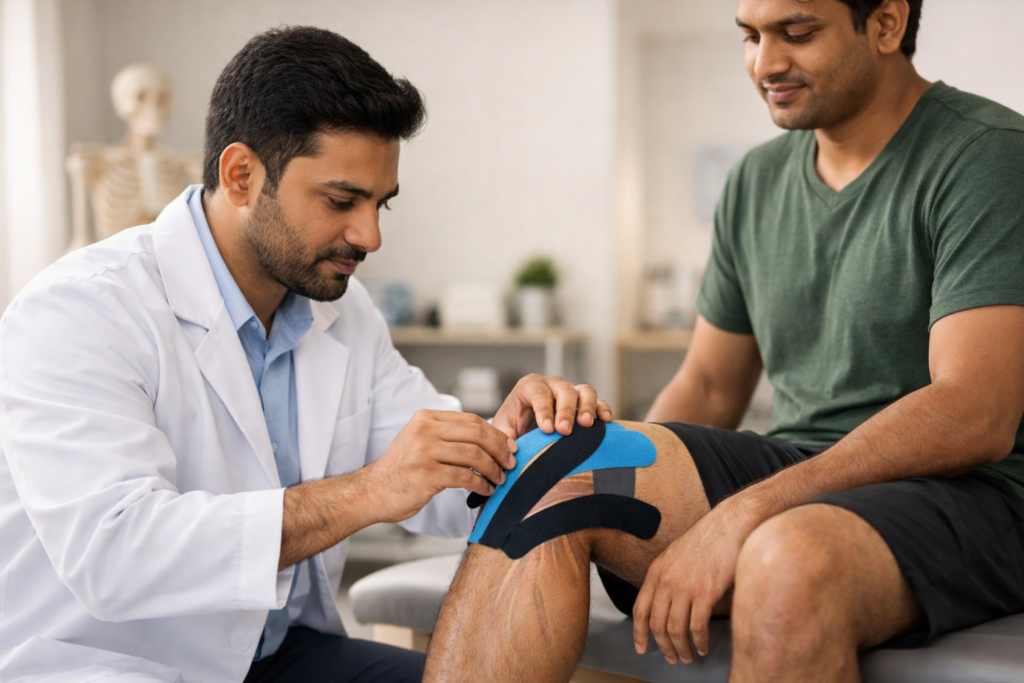
Many patients who visit our clinic ask a simple question:
“Will taping help my pain?”
In many cases, the answer is yes—when used correctly.
Taping has been used in physiotherapy for years as a supportive technique for injuries, muscle strain, and joint discomfort. It doesn’t replace treatment, but when combined with proper exercises and guidance, it often makes movement easier and pain more manageable.
What Do We Mean by Physiotherapy Taping?
Physiotherapy taping is not the same as using regular medical tape at home. The tapes used in clinics are designed to stretch, breathe, and move with the body.
Depending on the injury, tape may be applied to:
- Support a muscle that is overloaded
- Stabilize a joint after strain or sprain
- Reduce discomfort during daily activities
- Improve posture awareness
The goal is simple: support the body without stopping natural movement.
How Taping Actually Helps?
Pain usually doesn’t come from one single cause. It may be due to muscle weakness, poor movement habits, swelling, or repeated stress. Taping helps in a few practical ways:
Less Load on Painful Areas
By gently supporting the area, taping reduces excessive strain on injured tissues. This often allows patients to move with less fear and stiffness.
Better Movement Awareness
Many people don’t realize how they move until pain appears. Tape gives light feedback through the skin, reminding the body to move in a better position.
Mild Swelling Control
Certain taping patterns are useful in managing mild swelling, especially after injury or overuse.
Confidence During Activity
Patients often say they feel more secure while walking, exercising, or returning to work when tape is applied correctly.
Conditions Where Taping Is Commonly Used
In our physiotherapy practice, taping is often used for:
- Knee pain during walking or climbing stairs
Shoulder pain and instability
Ankle sprains
- Lower back discomfort
- Neck and upper back pain related to posture
- Sports-related muscle strain
It is helpful for both active individuals and people who experience pain due to long sitting or repetitive work.
Different Types of Taping We Use
Elastic (Kinesiology) Taping
This type of tape stretches with movement and is commonly used for muscle support, posture correction, and pain relief.
Rigid or Athletic Taping
Used mainly for joint protection, especially after recent injuries like ankle sprains.
The choice of tape depends on the condition, activity level, and stage of recovery.
Is Taping Enough on Its Own?
This is important to understand.’
Taping is not a permanent solution. It helps manage symptoms, but long-term improvement comes from:
- Strengthening weak muscles
- Improving flexibility
- Correcting movement patterns
- Gradually returning to activity
That’s why at Matteo Physio, taping is usually combined with exercise-based physiotherapy, not used alone.
How Long Can Tape Stay On?
Most physiotherapy tapes can stay on for 2 to 4 days. They are usually safe for daily activities and light exercise.
However, if you notice skin irritation, itching, or discomfort, the tape should be removed.
Taping should always be applied by a trained physiotherapist. Incorrect application may not help and can sometimes worsen symptoms.
Why Professional Assessment Matters
Two people can have knee pain, but for completely different reasons.
Without proper assessment, taping may only cover the problem instead of addressing it. A physiotherapist looks at posture, movement, strength, and daily habits before deciding how and where tape should be applied.
This makes the treatment safer and more effective.
Taping at Matteo Physio
At Matteo Physio, taping is used as a supportive part of treatment—not a shortcut. Our focus is always on helping patients recover properly and return to normal movement with confidence.
If pain is affecting your work, exercise, or daily routine, a physiotherapy assessment can help you understand the cause and the right way forward.
In Simple Words
Taping can reduce pain, improve movement, and provide support during recovery. When used correctly and combined with physiotherapy exercises, it can make a real difference.