
Most people who walk into a physiotherapy clinic come with one simple goal — they just want the pain to stop.
Soon after, another question follows:
Do I need hands-on treatment, or should I focus on exercises?
It’s a fair question. At Matteo Physio, we hear it almost every day. The truth is, recovery rarely works in straight lines. Some patients feel better quickly with manual therapy. Others improve only once they start moving more. In most cases, real progress happens when both approaches are used together — at the right time.
Let’s break it down in simple terms.
What Is Manual Therapy?
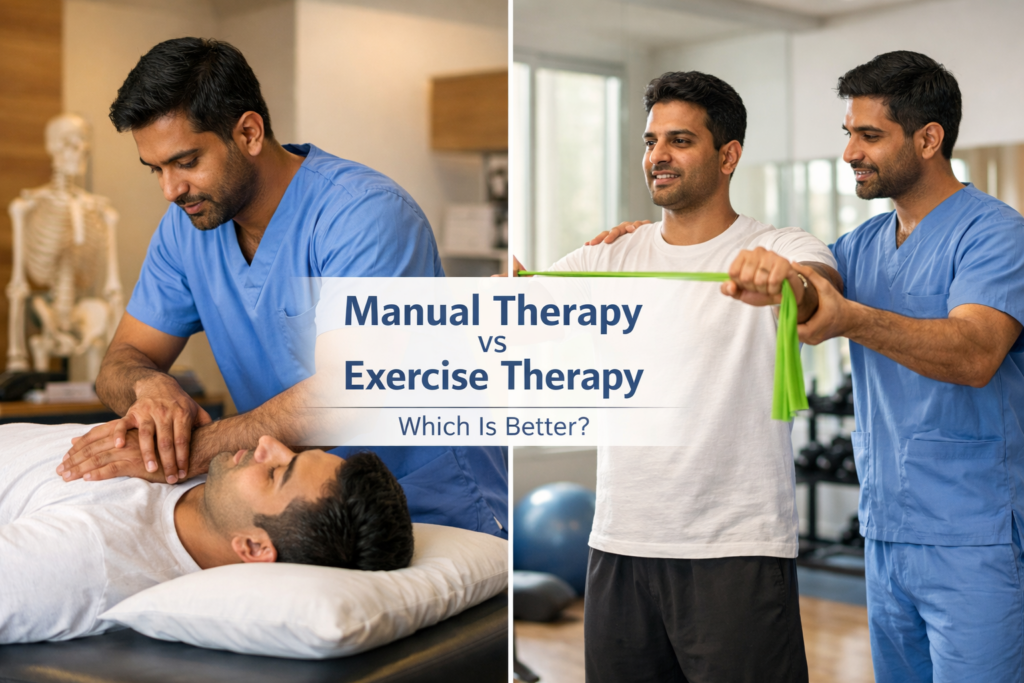
Manual therapy is the hands-on part of physiotherapy. Your therapist uses their hands to work on stiff joints, tight muscles, and restricted tissues. This can include joint movements, muscle release, stretching, and soft tissue techniques.
Most patients notice relief after these sessions. Movement feels easier. Muscles feel lighter. Pain settles.
Manual therapy mainly helps by:
- Reducing pain
- Improving joint mobility
- Relaxing tight muscles
- Improving blood flow
It works especially well when pain is recent, movement feels blocked, or muscles are protecting an injured area.
People with neck stiffness, frozen shoulder, back pain, or sports injuries often feel a clear difference after hands-on treatment.
But here’s something important to understand:
Manual therapy opens the door — it doesn’t always keep it open.
What Is Exercise Therapy?
Exercise therapy is where long-term recovery really takes shape.
Here, the patient becomes an active part of the process. Your physiotherapist designs specific exercises based on your condition. These may focus on strength, flexibility, balance, posture, or everyday movement.
Unlike manual therapy, exercises don’t usually give instant relief. Instead, they rebuild your body slowly and steadily.
Exercise therapy helps to:
- Strengthen weak muscles
- Improve flexibility
- Correct poor movement habits
- Support joints
- Reduce the chances of future injury
This approach is especially helpful for chronic back pain, knee problems, arthritis, post-surgery recovery, and general weakness.
Simply put, exercises teach your body how to move properly again.
The Real Difference Between the Two
A simple way to look at it:
Manual therapy helps you feel better.
Exercise therapy helps you stay better.
Manual therapy is passive — the therapist does most of the work.
Exercise therapy is active — your involvement matters.
Manual therapy often brings faster relief.
Exercise therapy brings stronger, longer-lasting results.
That’s why choosing only one rarely leads to complete recovery.
So Which One Should You Choose?
The better question is: what does your body need right now?
Manual therapy usually helps when:
- Pain is fresh or intense
- Movement feels restricted
- Muscles are in spasm
- You’re just starting rehabilitation
It prepares your body by calming pain and improving mobility.
Exercise therapy becomes essential when:
- Pain has reduced
- Muscles feel weak
- Posture needs correction
- You want lasting improvement
This is where strength, control, and confidence return.
Why Combining Both Works Best
In real clinical practice, the best results come from using both together.
Manual therapy creates movement. Exercise therapy protects that movement.
Think of it like this:
Manual therapy unlocks stiff areas. Exercises train your body to use that freedom.
At Matteo Physio, a shoulder patient may start with hands-on techniques to reduce pain, followed by gradual strengthening. Someone with back pain may receive mobility work along with core stability exercises.
Treatment changes as recovery progresses. There’s no fixed formula.
Every body responds differently.
Why Personalised Physiotherapy Matters
Two people can have the same diagnosis and still need very different treatment plans.
Work habits, lifestyle, age, stress, fitness level, and previous injuries all influence healing. That’s why random online exercises often don’t solve the problem.
A physiotherapist looks at how you move, where your body compensates, and what triggers discomfort. Only then is the right balance of manual therapy and exercise therapy decided.
This personalised approach not only speeds recovery but also helps prevent pain from coming back.
Final Thoughts
Manual therapy and exercise therapy are not competitors. They support each other.
Hands-on treatment helps calm pain and restore movement. Exercises build strength and keep problems from returning.
If you’re unsure what your body needs, a proper assessment is always the best place to start.
At Matteo Physio, our goal is simple — reduce pain, restore movement, and help you return to daily life with confidence, one step at a time.