
Neck Pain from Mobile and Laptop Use: Why So Many People Are Dealing With It Today
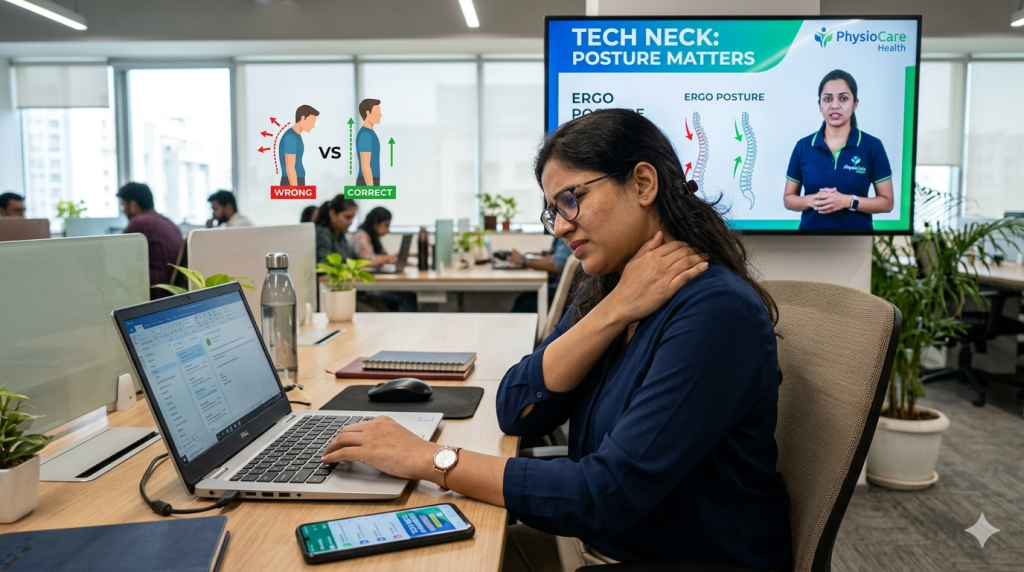
Neck pain has become so common that many people almost treat it as a normal part of life.
A long day at work ends with a stiff neck.
You wake up and feel tightness around your shoulders.
You turn your head while driving and notice discomfort.
For a lot of people, these things happen so often that they stop paying attention to them.
The strange part is that many of us are not doing heavy physical work.
We’re not lifting weights all day.
We’re not working on construction sites.
Most of the time, we’re just sitting.
And that’s exactly where the problem often starts.
A Typical Day Looks Like This
You wake up and check your phone.
While having breakfast, you scroll through messages.
Then work begins.
Maybe you’re on a laptop for six or seven hours. Maybe more.
After work, there’s more screen time. Social media. Videos. Emails. Chats.
Before sleeping, most people look at their phones one last time.
It sounds normal because that’s how modern life works.
But when you add all those hours together, your neck spends a huge part of the day in the same position.
The body notices that, even if we don’t.
It Doesn’t Usually Hurt Right Away
That’s one reason people ignore the issue.
The pain doesn’t suddenly appear one morning and announce itself.
It creeps in slowly.
First, your neck feels a little tight.
A few weeks later, your shoulders start feeling heavy by the evening.
Then headaches begin showing up once in a while.
At some point, you catch yourself stretching your neck every few minutes without even thinking about it.
By then, the body has often been under strain for quite some time.
The Problem Is Often the Position, Not the Device
People usually blame the phone or laptop.
The truth is, the device itself isn’t the problem.
It’s how we use it.
Think about how most people look at their phones.
The head drops forward.
The shoulders round inward.
The upper back starts slouching.
Now imagine holding that position again and again every day.
The muscles around the neck never really get a chance to relax.
Eventually, they become tired, tight, and irritated.
That’s when discomfort starts becoming a regular visitor.
Laptops Create Their Own Set of Problems
Laptop screens are often lower than eye level.
Because of that, people naturally lean toward the screen.
Not intentionally.
It just happens.
One hour passes.
Then another.
Before you know it, you’ve spent half the day sitting in a position your body doesn’t particularly like.
The funny thing is that many people don’t notice their posture until somebody points it out.
Or until their neck starts hurting.
Sometimes the Solution Is Surprisingly Simple
When people hear the word “treatment,” they often expect something complicated.
But small changes can make a noticeable difference.
Raising the screen slightly.
Holding the phone higher.
Taking a short walk every hour.
Stretching for a minute or two between tasks.
None of these things sound impressive.
Yet they often help because they reduce the stress that keeps building throughout the day.
The body generally responds well when it’s given a chance to move.
The Body Was Never Designed to Stay Still All Day
One thing physiotherapists see regularly is people staying in the same position for hours.
The neck gets blamed, but the entire body feels the effect.
Muscles like movement.
Joints like movement.
Even a few minutes of walking can help break the cycle of stiffness.
That’s why movement is usually part of recovery.
Not intense exercise.
Just regular movement.
Why Shoulder Tightness Often Comes Along
Many people say their neck hurts.
But when they describe the problem, they also mention tight shoulders.
That isn’t a coincidence.
The neck and shoulders work closely together.
When one area becomes overloaded, the other often joins in.
That’s why discomfort sometimes spreads across the upper back as well.
The body rarely works in isolation.
Everything is connected.
When Physiotherapy Can Help
If the pain keeps returning, professional guidance can make things easier.
Not because someone will magically fix the problem overnight.
But because identifying the reason behind the pain matters.
Sometimes it’s posture.
Sometimes it’s muscle weakness.
Sometimes it’s a combination of several small things.
Physiotherapy helps people understand what is happening and what changes are likely to help.
For many people, that understanding becomes the first real step toward recovery.
Don’t Wait Until It Starts Affecting Everything
Most people wait longer than they should.
They hope the pain will disappear on its own.
Sometimes it does.
Sometimes it doesn’t.
If neck pain keeps returning, starts causing headaches, travels into the arms, or begins affecting sleep and daily activities, it’s usually worth getting checked.
Read more about why neck pain keeps coming back, or book a consultation with the best physiotherapist in Sector 51 Gurugram.
Final Thoughts
Technology isn’t going anywhere.
Phones and laptops are part of modern life.
The goal isn’t to stop using them.
The goal is to use them in a way that doesn’t make your body pay the price.
A few small adjustments. Better posture. Regular movement. Paying attention to early warning signs.
These things may seem minor today.
But your neck will probably thank you for them later.