
Dry Needling Therapy: A Simple Explanation for Anyone Dealing With Muscle Pain
If you’ve ever had that one muscle knot that just refuses to loosen up – no matter how much you stretch or massage, you’re not alone. Many people end up searching for relief and eventually hear about something called dry needling. At first, it sounds similar to acupuncture, and that’s why people often confuse the two. But dry needling is actually a modern physiotherapy technique, built on understanding how muscles behave when they’re stressed or overworked.
So, what is dry needling?
Think of it like this: when a muscle gets tired or irritated, it forms a tiny knot deep inside. This spot is called a trigger point. It can cause pain exactly where it sits, or it can send discomfort to other parts of the body, like a knot in your shoulder giving you a headache.
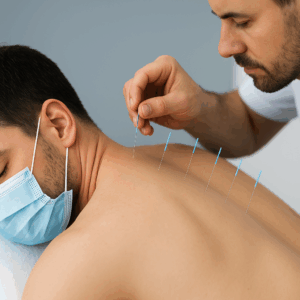
During dry needling, a physiotherapist uses a very thin, sterile needle to reach that knot and nudge the muscle into letting go. Nothing is injected; the needle itself is enough to get the muscle to relax. For many people, it’s a strange but surprisingly effective way to release tension.
How does it actually help?
A stressed muscle doesn’t behave normally. Blood flow gets restricted, stiffness increases, and the area becomes sensitive. When the needle reaches the trigger point, the muscle often gives a quick twitch. It might feel odd, but it’s a sign that the muscle is releasing its tight grip.
Once this happens, a few things follow naturally:
- The muscle relaxes
- Blood circulation improves
- Pain signals reduce
- Movement becomes smoother
That’s why people who’ve been struggling with long-term pain often feel lighter or freer right after the session.
Who benefits from dry needling?
People walking in with neck stiffness, back pain that travels down the leg, shoulder tension, tennis elbow, knee pain—these are some of the most common cases. It’s also used a lot for headaches that come from tight neck or shoulder muscles, and it’s popular among athletes because it helps them recover quicker after intense activity.
What is the session like?
Most first-time patients expect the procedure to be worse than it actually is. Here’s how it usually goes:
The physiotherapist first checks which muscles are tight or tender. Then the area is cleaned, and the needle is inserted gently. Some people feel only a light prick; others feel a quick twitch. It’s usually tolerable and lasts only a moment.
After the muscle releases, you may notice the area relaxing almost instantly. At the end, your therapist might suggest a bit of stretching, drinking more water, or avoiding heavy workouts for a short time. A little soreness afterward is normal and usually fades within a day or two.
Is it safe?
Yes, as long as it’s done by someone trained. The needles are very fine, sterile, and used only once. Side effects are rare and usually mild.