
Electrotherapy in Physiotherapy: How It Works and When It’s Actually Helpful
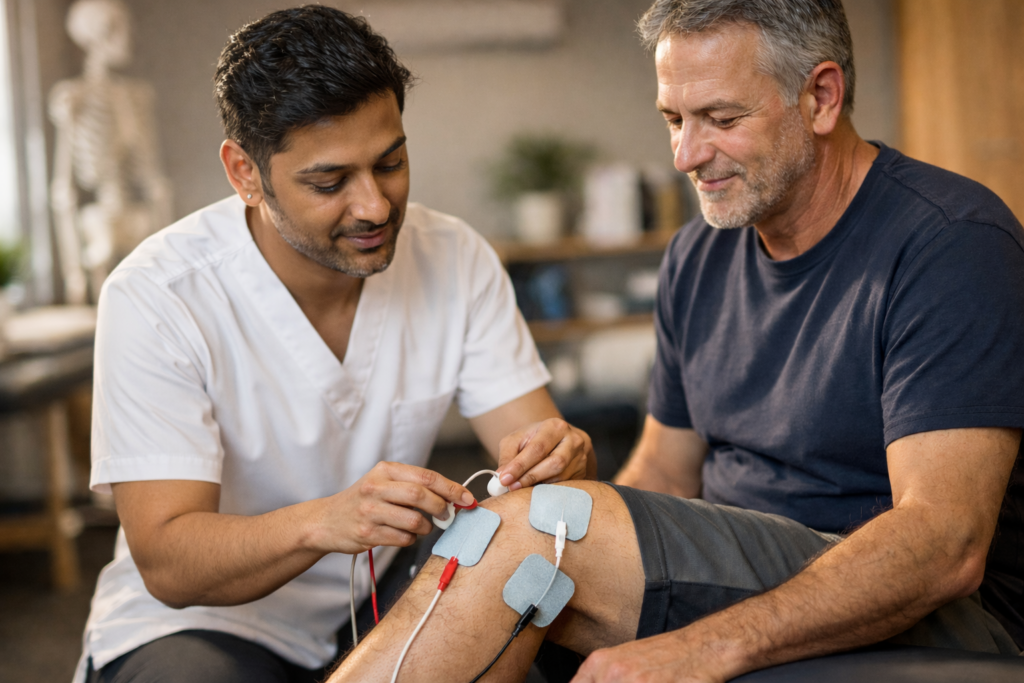
If you’ve ever visited a physiotherapy clinic for back pain, knee issues, or a sports injury, chances are you’ve seen those small pads connected to a machine. Many first-time patients look at it and quietly wonder, “Is this going to hurt?”
In most cases, it doesn’t.
Electrotherapy is simply a supportive treatment physiotherapists use to manage pain and help the body recover more comfortably. The electrical current involved is very mild and carefully controlled. Most people feel nothing more than a light tingling or gentle buzzing on the skin.
Over time, it has become a routine part of many physiotherapy programs, especially during the early, painful stage of recovery.
What Electrotherapy Really Means
Put simply, electrotherapy uses low-level electrical impulses delivered through soft electrode pads placed on the skin. These impulses stimulate nerves and muscles in a controlled way.
Physiotherapists usually recommend it to:
- Ease pain signals
- Relax tight muscles
- Improve circulation in a targeted area
- Support the natural healing process
It’s worth noting that electrotherapy is rarely used on its own. In most treatment plans, it works alongside exercises and manual therapy.
What’s Happening Inside the Body?
The machine may look technical, but the effects are fairly easy to understand. Electrotherapy helps the body in a few practical ways.
It Helps Quiet Pain Messages
Pain travels along nerve pathways to the brain. Certain electrotherapy settings interfere with how those signals move. When fewer pain signals reach the brain, the discomfort feels less intense.
This is one reason some patients notice relief even after the first session.
It Encourages the Body’s Own Pain Relief
Our body naturally produces chemicals called endorphins, which act like built-in painkillers. Some electrotherapy modes gently encourage the release of these chemicals. The effect is subtle but often soothing.
Many patients describe feeling more comfortable for a while after the session ends.
It Gently Activates Weak Muscles
After injury, surgery, or long periods of rest, muscles can become weak simply because they haven’t been used enough. Electrical muscle stimulation creates small, controlled contractions that help keep the muscle engaged.
Physiotherapists often use this when full exercise isn’t yet possible.
It Supports Better Blood Flow
Good circulation plays a quiet but important role in healing. Electrotherapy can increase blood flow in the treated area, which helps deliver oxygen and nutrients where they’re needed most.
Over time, this can support tissue recovery.
Common Types You May Come Across
Not every patient receives the same kind of electrotherapy. The choice depends on the condition and the treatment goal.
TENS Therapy
TENS is probably the most familiar option. It mainly focuses on pain relief at the nerve level.
It’s commonly used for:
- Neck and back pain
- Knee discomfort
- Shoulder stiffness
- Mild nerve pain
Most people describe the sensation as gentle tingling on the surface of the skin.
Interferential Therapy (IFT)
IFT works a bit deeper than TENS. Because of that, physiotherapists often prefer it when the pain feels more internal or when swelling is involved.
It is frequently used for:
- Sports injuries
- Muscle spasms
- Joint pain
- Post-injury swelling
Patients often find it surprisingly comfortable.
EMS / NMES (Muscle Stimulation)
This type focuses more on muscle activation than pure pain relief. It is especially helpful when muscles have weakened after surgery or injury.
You’ll often see it used during:
- Post-operative rehab
- Muscle re-education
- Neurological recovery
- Sports conditioning programs
Therapeutic Ultrasound
Even though it uses sound waves rather than electrical current, ultrasound therapy is usually grouped with electrotherapy equipment in many clinics.
It is commonly recommended for soft tissue problems such as:
- Tendon irritation
- Ligament sprains
- Local inflammation
- Scar tissue stiffness
When Do Physiotherapists Usually Suggest It?
Electrotherapy tends to be most useful when pain or muscle tightness is making movement difficult. It helps calm things down so the patient can participate more comfortably in exercise therapy.
It may be included in treatment plans for:
- Persistent back or neck pain
- Frozen shoulder
- Knee osteoarthritis
- Sciatica symptoms
- Tennis elbow
- Muscle strain or spasm
- Sports injuries
- Stiffness after fracture
Of course, the final decision always depends on an individual assessment.
What a Session Typically Feels Like
If you’re imagining anything intense, you can probably relax.
After a quick assessment, the physiotherapist places small electrode pads on the target area. The machine is then slowly adjusted. Most patients report a mild tingling, gentle tapping, or soft buzzing feeling.
Sessions usually last somewhere between 10 and 20 minutes, and there’s typically no downtime afterward.
Is Electrotherapy Safe?
For most people, yes — provided it’s done by a qualified physiotherapist and after proper screening.
You should always inform your therapist if you have:
- A pacemaker
- Epilepsy
- Certain heart conditions
- Pregnancy
- Skin infection or open wound in the treatment area
These precautions help ensure the therapy is used appropriately.
The Practical Benefits Patients Notice
When used at the right stage of recovery, electrotherapy can make rehabilitation more manageable. Patients often report:
- Noticeable pain relief
- Less muscle tightness
- Easier movement
- Better comfort during exercises
- A smoother early recovery phase
Final Thoughts
Electrotherapy isn’t meant to replace exercise or hands-on physiotherapy. Think of it more as a helpful support tool that makes the recovery process more comfortable, especially in the beginning.
If pain or stiffness has been holding you back, a proper physiotherapy assessment can determine whether electrotherapy would be useful in your case.