
How Desk Jobs Are Affecting Your Posture and Spine Health
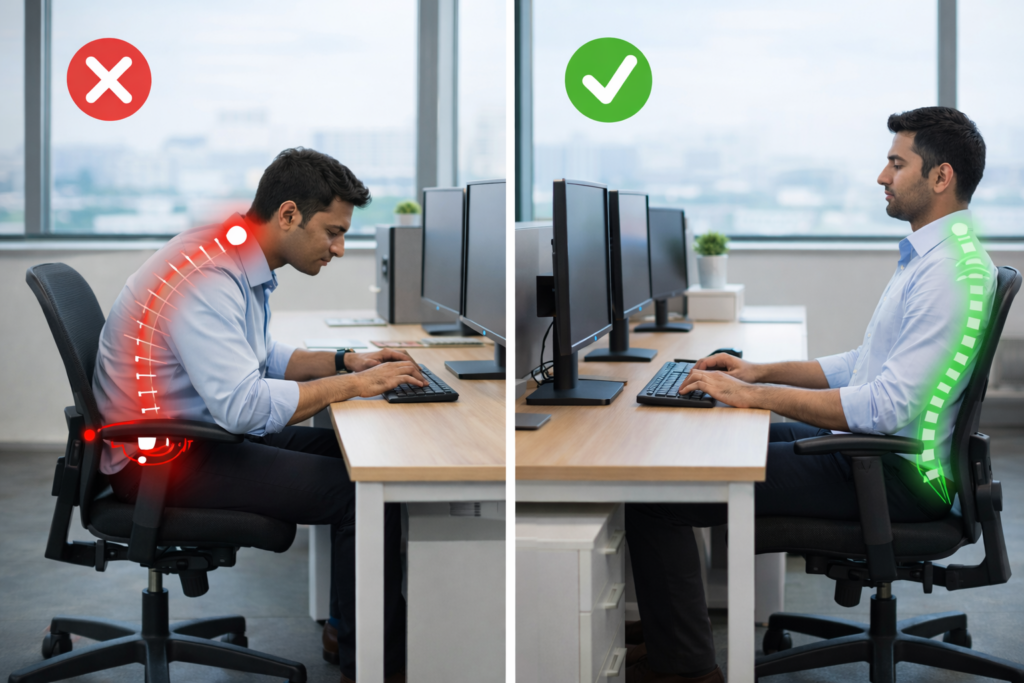
At 9:00 a.m., you sit down “just for a few minutes.” By lunchtime, you’ve barely moved. By evening, your back feels tight, your neck feels heavy, and you’re stretching without even realizing it.
This isn’t coincidence. It’s a pattern.
Most desk jobs don’t feel physically exhausting, but they slowly change how your body holds itself. The spine adapts to whatever position you repeat daily. If that position is slightly hunched over a keyboard, your body begins to treat that posture as normal.
What Actually Happens When You Sit All Day
Your spine has natural curves. These curves help absorb shock and distribute weight evenly. When you sit for long hours — especially while leaning forward — those curves shift.
The head moves in front of the shoulders.
The shoulders round inward.
The lower back loses its natural arch.
At first, nothing dramatic happens. Maybe just mild stiffness. But muscles that stay shortened for hours begin to tighten. Muscles that are rarely used begin to weaken. Over weeks and months, that imbalance builds strain.
The “Office Posture” Problem
Spend a day observing people in an office or even a café. You’ll notice a familiar shape: chin forward, upper back slightly curved, shoulders sloping inward.
This posture creates three common issues:
1. Neck Overload
Your head weighs around 4–5 kilograms. When it shifts forward, the neck muscles must work harder to hold it up. Even a small tilt increases the load significantly. That’s why long screen time often ends with neck stiffness or headaches.
2. Upper Back Fatigue
When shoulders roll forward, the muscles between the shoulder blades stretch and weaken. Over time, sitting upright feels tiring because those muscles are no longer strong enough to support you comfortably.
3. Lower Back Pressure
Sitting places more pressure on spinal discs than standing. Without proper support, the lower back flattens. This increases strain and can eventually irritate nearby nerves.
Why It Feels Worse at the End of the Day
Many people say, “I’m fine in the morning, but by evening my back hurts.”
That’s because muscles can tolerate stress for a while. But when held in one position for hours, circulation decreases. Joints stiffen. The spine becomes less mobile. By late afternoon, even small movements feel uncomfortable.
The body is not designed for stillness. It is designed for movement.
Subtle Signs Your Desk Job Is Affecting You
You may notice:
- Adjusting your position constantly
- Stretching your neck frequently
- Feeling tightness when standing up
- Shoulder discomfort while driving
- Mild tingling in arms after typing
These early signs often get ignored because they seem minor. However, they signal that your posture needs attention.
The Long-Term Picture
If poor sitting habits continue for years, small problems can turn into persistent ones. Muscle imbalance can affect joint alignment. Spinal discs may face uneven pressure. Flexibility reduces. Pain becomes more frequent instead of occasional.
The body adapts — but not always in a healthy way.
Simple Changes That Make a Difference
You don’t need an expensive setup to protect your spine. Small adjustments help.
- Raise your screen so your eyes look straight ahead.
- Keep both feet flat on the floor.
- Sit back in your chair instead of perching on the edge.
- Take short standing or walking breaks every 30–40 minutes.
Movement is more important than perfection. Even brief stretches during the day reduce stiffness.
Strengthening your core and upper back also improves posture naturally. When muscles are strong, sitting upright feels easier and less forced.
A Healthier Way to Look at Work
Desk jobs aren’t the enemy. Prolonged, repetitive positioning is.
Think of posture like a habit. The more you repeat a position, the more your body memorizes it. If you practice better alignment and add regular movement, your body adapts positively.
Your spine supports you every day — from morning meetings to evening relaxation. Taking small steps now can prevent larger problems later.
Work will always demand your time. Protecting your posture ensures it doesn’t demand your health in return.