
Kinesio Taping for Sports Injuries in Gurgaon
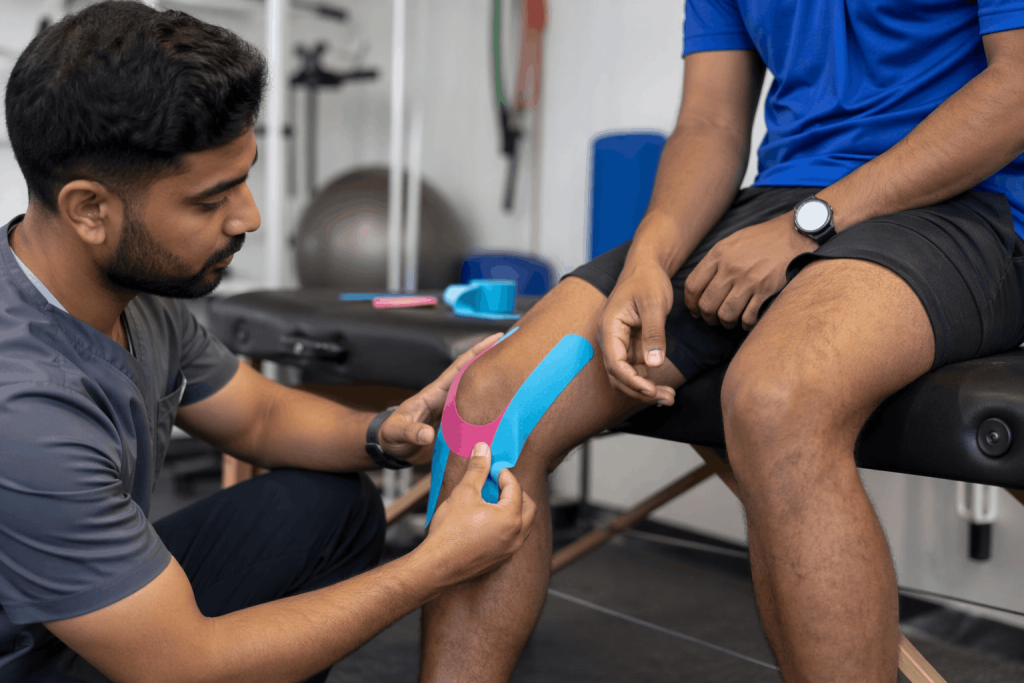
If you’ve watched a match or spent time around a training ground, you’ve probably noticed those bright strips of tape on shoulders, knees, or backs. It’s easy to assume they’re just for support or visibility. In practice, Kinesio taping is used more thoughtfully—less as a fix on its own, more as a small aid that works alongside proper rehabilitation.
In Gurgaon, where a lot of people stay active—gym sessions, weekend cricket, running groups—sports injuries are fairly common. Kinesio taping has found its place here because it’s simple, non-invasive, and can be used without interrupting daily movement.
What Kinesio Taping Actually Does
The tape itself is elastic, quite different from the rigid tapes used to restrict movement. When applied correctly, it moves with the skin. The idea is not to hold a joint in place but to give a kind of gentle feedback to the body.
Many patients describe it as a subtle support. It doesn’t stop you from moving, but it reminds the body to move more carefully. That can help reduce strain on an injured area, especially during the early or middle phase of recovery.
There’s also a small lifting effect on the skin, which is believed to help with circulation and reduce local swelling. While the effect is not dramatic, in some cases it adds to overall comfort.
Where It’s Commonly Used
Kinesio taping is often used for everyday sports-related issues:
- Knee discomfort after running or gym workouts
- Shoulder strain from weight training
- Lower back tightness
- Ankle instability after a minor sprain
- Tennis or golfer’s elbow
It’s not limited to athletes. Even people with an active routine—long office hours followed by workouts—sometimes benefit from it when dealing with minor strain.
Part of a Larger Treatment, Not the Whole Plan
One thing worth being clear about: taping is not a standalone treatment.
It works best when it’s used along with physiotherapy exercises, movement correction, and gradual strengthening. On its own, it might provide temporary comfort, but it doesn’t address the root cause of the injury.
In most cases, a physiotherapist decides when taping makes sense—usually when a bit of support or pain reduction can help the patient continue their rehab more comfortably.
How It Feels During Daily Activity
People often ask if the tape restricts movement. It doesn’t, at least not in the usual sense.
You can walk, work, and even train (depending on the injury) while wearing it. Some forget it’s there after a while. Others notice a slight pull or awareness, especially when moving in a way that previously caused discomfort.
That awareness is often the point.
When It’s Useful
Kinesio taping tends to be more helpful in certain situations:
- When there’s mild to moderate pain but movement is still possible
- When returning to activity after an injury
- When a joint needs a bit of support without being immobilised
- When swelling or muscle tightness is present
It’s less useful in severe injuries where rest or more structured treatment is needed first.
Getting It Applied Properly
Taping might look simple, but proper application matters. The direction, stretch, and placement all affect how it works.
In Gurgaon, most physiotherapy clinics that offer sports rehabilitation also provide Kinesio taping as part of the session. It’s usually quick to apply, but it’s based on an assessment of the injury rather than a standard pattern.
Trying to copy taping styles from online videos without understanding the condition often doesn’t help much—and sometimes can irritate the skin.
A Small but Useful Addition
Kinesio taping is not a miracle solution, and it doesn’t replace proper rehab. But in the right situation, it can make movement a little easier, reduce discomfort, and support the recovery process.
For many people dealing with sports injuries in Gurgaon, that small difference is often enough to stay consistent with their exercises—and consistency, more than anything else, is what leads to recovery.
Explore our full sports injury rehabilitation services, or consult the best physiotherapist in Sector 51 Gurugram.