
Why Every Athlete Needs a Sports Physio
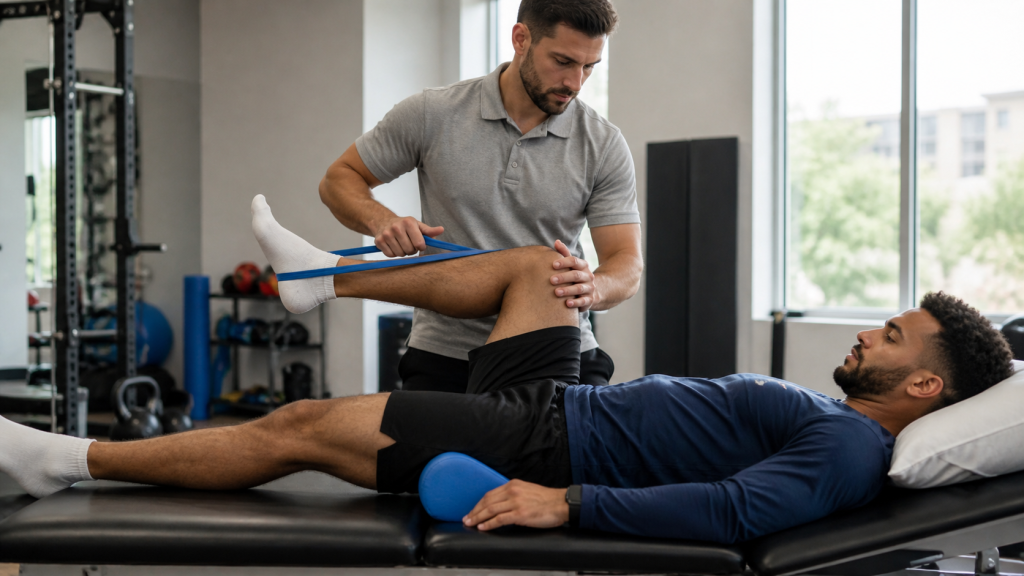
Let’s be honest for a moment.
When most people think about physiotherapy, they imagine injuries. A sprained ankle. A pulled muscle. Something that has already gone wrong.
But talk to athletes — even at a basic level — and you’ll hear a slightly different story.
For many of them, physiotherapy isn’t just about fixing problems. It’s about staying in the game.
Because here’s the thing.
Training pushes the body. Matches push it even more. And over time, even small strains can quietly build up.
That’s where a sports physiotherapist comes in.
It’s Not Only About Injuries
A common misconception is that you only need a physio when something hurts.
In reality, many athletes work with a physiotherapist even when they feel fine.
Why?
Because performance and injury are often connected.
A slight imbalance in movement.
A muscle that’s tighter than it should be.
A joint that isn’t moving as freely.
These small issues might not cause pain immediately. But under regular training, they can turn into something bigger.
A sports physio looks for these early signs.
Understanding How Your Body Moves
Every sport has its own demands.
A runner relies heavily on leg alignment and stride.
A cricketer uses repetitive shoulder movements.
A football player constantly changes direction and pace.
A sports physiotherapist studies how your body moves during these activities.
They observe patterns. Identify areas of strain. And suggest small adjustments that can make movement more efficient.
Sometimes the change is simple — a tweak in posture, a correction in technique, or a strengthening exercise for a weaker muscle group.
Over time, those small changes can improve performance and reduce stress on the body.
Helping You Recover Faster
Training and matches take a toll on the body.
Even when there’s no clear injury, muscles go through fatigue and micro-stress.
This is where recovery becomes important.
A sports physio can guide you through recovery techniques that help the body bounce back quicker.
This may include:
• targeted stretching
• manual therapy
• mobility work
• recovery exercises based on your sport
The idea is to help the body return to its normal state before the next session.
Better recovery often means better performance in the long run.
Preventing Injuries Before They Happen
Injuries rarely appear out of nowhere.
They usually build up over time.
A tight hamstring that’s ignored.
A weak core that isn’t supporting the body properly.
Repetitive stress on a joint without enough recovery.
A sports physiotherapist works to identify these risks early.
They design exercises and routines that strengthen weak areas and improve flexibility where needed.
This doesn’t guarantee that injuries will never happen — but it can reduce the chances significantly.
Support During Rehabilitation
When an injury does happen, having a sports physio becomes even more important.
Recovery isn’t just about rest.
It involves gradually rebuilding strength, improving mobility, and safely returning to activity.
A sports physiotherapist guides this process step by step.
They help ensure that the body heals properly without rushing back too soon — something that often leads to re-injury.
It’s Not Just for Professional Athletes
You don’t have to be a professional athlete to benefit from sports physiotherapy.
Anyone who plays regularly — whether it’s gym workouts, running, football, badminton, or weekend sports — puts stress on their body.
Even at a basic level, guidance from a physiotherapist can help:
• improve movement
• reduce unnecessary strain
• build better strength and flexibility
A Different Way to Look at Fitness
Most people focus on training harder.
Adding more sessions. Increasing intensity. Pushing limits.
But sometimes, the smarter approach is to understand how the body is responding to that effort.
A sports physiotherapist helps you do exactly that.
They don’t just look at how much you train. They look at how well your body handles that training.
Staying in the Game Longer
At the end of the day, every athlete—whether beginner or experienced—wants the same thing: to keep playing, keep improving, and stay active without constant setbacks.
Working with a sports physio isn’t about simply doing more. It’s about doing things in a way that supports your body over time.
That’s often what makes the biggest difference.
Learn more about sports injury rehabilitation at Matteo Physio, or connect with the best physiotherapist in Sector 51 Gurugram.