
Knee Pain Treatment Without Surgery: What Most People Don’t Realize
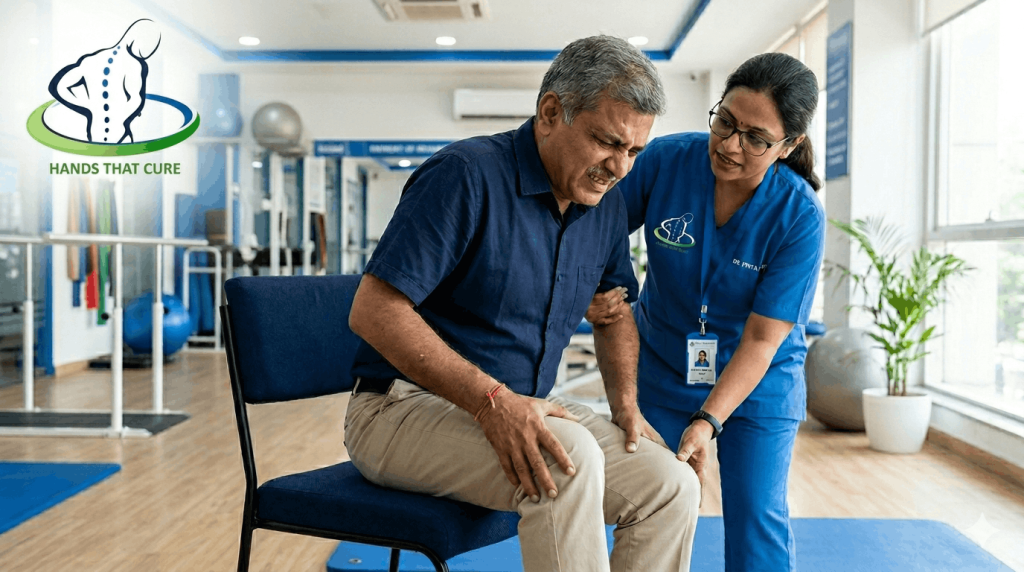
Knee pain is something that quietly starts in daily life.
A lot of people don’t even notice it in the beginning.
Maybe it starts when you climb stairs and feel a little pressure in the knee.
Or when you sit for too long and then try to stand up.
Sometimes it just feels like a small discomfort after a long walk.
And honestly, most people ignore it at that stage.
Because it doesn’t feel serious.
You think it will go away on its own… or maybe it’s just because of tiredness or age.
But slowly, it starts becoming more noticeable.
Walking doesn’t feel as easy as before.
You start adjusting your steps without realizing it.
Even simple things like sitting down or getting up begin to feel a bit uncomfortable.
That’s usually when people start worrying.
Why this happens in the first place
Knee pain doesn’t come suddenly most of the time.
It builds up slowly.
Sometimes it’s weak muscles that are not supporting the joint properly.
Sometimes it’s long hours of sitting or standing in the same position.
For some people, it’s old injuries that were never fully treated.
And in many cases, it’s just daily stress on the knees that keeps adding up over time.
The knee joint actually carries a lot of pressure every single day.
So even small imbalance in movement or posture can start causing discomfort.
The signs are usually small at first
Before real pain starts, the body gives small signals.
A slight stiffness in the morning.
Mild discomfort while walking.
Feeling like your knee is “tight” after sitting.
Or a little clicking sound while moving.
These things don’t seem important at first, so most people just ignore them.
But the body is already trying to say something.
Daily habits make a bigger difference than people think
A lot of knee issues are not just medical problems.
They are also lifestyle problems.
Sitting too much without movement.
Avoiding walking completely because of fear of pain.
Using stairs in a wrong way.
Wearing flat or unsupported footwear.
Even these small habits, when repeated daily, slowly put extra pressure on the knee joint.
Can it get better without surgery?
In many cases, yes.
That’s the positive part.
Knee pain doesn’t always mean surgery is needed.
With the right physiotherapy approach, proper movement, and muscle strengthening, many people improve a lot over time.
At Matteo Physio, Gurgaon, under the guidance of Dr. Manoj Rajour, treatment is usually focused on:
Not just reducing pain…
but actually understanding why the pain is happening.
Then working on:
- improving muscle strength
- improving joint movement
- correcting walking pattern
- reducing pressure on the knee
It’s a slow process, but it works when done consistently.
What people can do at home
Small things actually help more than people expect.
Not overloading the knee.
Keeping the body active with light movement.
Avoiding sudden strain.
And not sitting in one position for too long.
Even simple walking (if done correctly) can help the joint stay flexible.
When you should not ignore it
If knee pain is coming again and again…
or if walking is becoming uncomfortable…
or if stiffness is increasing day by day…
that’s usually a sign that it needs attention.
Waiting too long doesn’t help in most cases.
Early care is always easier than late treatment.
Final thought
Knee pain feels like a small issue in the beginning.
But slowly, it can start affecting your daily routine more than you realize.
The good part is — most people don’t actually need surgery.
With proper care, guided physiotherapy, and small lifestyle changes, recovery is very possible.
And sometimes, the real relief is just being able to walk normally again without thinking about pain every few steps.
For joint pain after surgery, see our joint replacement rehabilitation guide, or consult the best physiotherapist in Sector 51 Gurugram.